Artist Research
Florian Imgrund
"A German photographer got his first film camera two summers ago, and has been taking amazing photos ever since. Among them are some beautiful, nicely done double exposures. Take a look at some of his work after the jump!
If you check out Florian Imgrund‘s Flickr photostream, you’ll find a lot of outstanding film photographs, all in marvelous monochrome. So outstanding in fact that it’s not hard to assume that he’s been taking film photographs for years. But, the German photograper says he got started in the summer of 2010 after acquiring his first film camera.
“The unique charm of analog photographs connected with the original handcraft of photography fascinate me. After I got my first analog camera in summer of 2010 I started shooting more and more,” he shares on his Flickr profile.
Among Florian’s eye-catching monochrome snaps are double exposures, all done without the aid of Photoshop and brimming with analogue goodness. In these doubles, Florian often puts together human elements against natural landscapes, thus creating an impression of man and his link to the world around him."
(Information found at http://www.lomography.com/magazine/166110-florian-imgrunds-double-exposures-in-monochrome on 11.12.2015)


(Images found at http://www.art-spire.com/en/photographie/fantastic-double-exposures-by-florian-imgrund/ on 11.12.2015)
Cameron Russell
Below is a questionnaire I came across on the Lomography website when researching Cameron Russell and his work. This is great as it explains why he likes film and why he likes multiple exposures...
1. Tell us about yourself.
I’m a shoot first and ask questions later kind of guy. I once watched 2300 movies in 3 years. Film is the only analog thing in my life, aside from a record player I found on the side of the road.
2. Why do you still shoot analogue?
I wasn’t into photography until about 3 1/2 years ago. My dad gave me a digital point and shoot. I used to to take pictures at concerts and such. It didn’t excite me. When I stumbled upon the cross processing, the colors touched me emotionally. That got me started on film, but it wasn’t until I found out about multiple exposures, that I got truly passionate about analog. Multiple exposures in a digital medium look like they are just set on top of each other. It’s static and cold. Analog multiple exposures flow into each other the same way memories do. They are unpredictable, soft, and dynamic.
3. What photographic equipment (cameras, films, and accessories) do you usually have in your bag?
My bag has several standard items. 2-3 rolls of fresh 35mm film 100 and 400 iso, 1 fresh roll of 400 iso 120 film, 2 texture/suject rolls to double with, a colorsplash flash, Diana flash with adapters, a small screwdriver kit for emergencies, a sharpie to mark rolls I’m shooting twice, a Sprocket Rocket, a small photo book to show people the types of things I shoot, 2 AA batteries, and some business cards for when people ask me about my cameras and what I’m doing. The LC-A+ is in my hand or back pocket and the Diana F+ is slung across my shoulder.
4. Share a trick of yours that will always result to a great photo.
I shoot mostly double exposures. When I shoot the texture portion of the double, I will move the iso rating on my LC-A+ down 2 stops from the film’s rating. It makes the texture more subtle and the subject stands out more without competing for attention. This works especially good on clouds, as they tend to be white and can blow out a shot.
5. What photographers influence your work?
I never went to school for photography and I am just now starting to learn about famous photographers. Most of my influences have been Lomographers I have followed on LomoHomes or flickr. Maya Newman, Jamie Mellor, and Simon Tomlinson were all people who’s results I chased after. Philippe Halsman is a major inspiration on my portrait work. In the end, what I try to do is modify and extrapolate new concepts from images I see. The end result I am chasing, now, is something I haven’t seen anyone do. That’s when I get a real sense of pride.


(All above images and information found at http://www.lomography.com/magazine/97065-5-questions-on-analogue-photography-with-cameron-russell on 08.02.2016)
Vivek Jena
Vivek is a freelance photographer who I cannot find much information about. He specialises in film photography, commercial and portraiture. I like the dreamlike images he creates with double exposures.

(Image found at http://farm5.static.flickr.com/4030/4708335154_b78f62d3d8.jpg on 08.02.2016)

(Image found at http://img.weburbanist.com/wp-content/uploads/2012/03/multiple-exposures-vivek-jena.jpg on 08.02.2016)

(Image found at https://c2.staticflickr.com/8/7337/9027680997_f032ae8ec5_b.jpg on 08.02.2016)
Maxim Trudolubov

(Image found at https://blogger.googleusercontent.com/img/b/R29vZ2xl/AVvXsEgGnqJAGeoLUpE8qFOqcN3YMYgSkaAZfr-pdfSrdaGqI4yIXkiYTXFVqViRbVhP7QVpV2tFxGomXWMGUJOp_IZysmWRI4GW5ZyBDczIOfKYn3GYQRQ0Yrzt7Z1tDx4PXW3dCUuWwwPHC21P/s1600/multiple-exposures-maxim.jpeg on 08.02.2016)

(Image found at http://d1kcl3yiuixneo.cloudfront.net/wp-content/uploads/long-haul-train-moscow-3757028177.jpg on 08.02.2016)

(Image found at https://globalvoices.org/wp-content/uploads/2010/08/4860295526_0a45b8ecf3-375x249.jpg on 08.02.2016)

(Image found at https://www.flickr.com/photos/max_trudolubov/4770578439/ on 08.02.2016)
Oliver Morris
(Information found at http://www.mymodernmet.com/profiles/blogs/insanely-beautiful-double on 08.02.2016)

(Image found at https://c2.staticflickr.com/6/5322/9799389393_2eca257576.jpg on 08.02.2016)

(Image found at http://40.media.tumblr.com/ebfc9797a1be844cea409a04b908c6d7/tumblr_n6nsp9XGHi1qbmgeto1_1280.jpg on 08.02.2016)

(Image found at http://viola.bz/wp-content/uploads/2011/11/Photos-by-Oliver-Morris-1.jpg on 08.02.2016)

(Image found at http://www.cruzine.com/wp-content/uploads/2011/12/016-double-exposure-photos-2.jpg on 08.02.2016)
Dan Mountford
"Dan Mountford illustrations and double exposure photo portraits defy the notion that excellence comes with age. He’s only 21. Extraordinary. As an artist he works in a wide variety of disciplines including photography, illustration, editorial and motion design and these pictures are a good example of his range of work.
Unlike many artists who use double exposure photography in their work Mountford is an analogue guy. There is no digital manipulation going on here. No. Most of the images you see here were created in the darkroom, in the old fashioned way, by placing one negative on top of another to develop a third image.
However, asides from the process of creating his work what’s most interesting about Mountford’s images is his choices of subject matter; the use of architecture, religious iconography, animals and flora and fauna. It is these disparate subjects – brought together through a complex process of manipulation and cross pollination – that give his work a beautiful sensibility for he is able to distil the complexity of each component into a well crafted, simple image that evokes a dreamlike space or as he calls it:
"a visual journey through our minds, in quiet, where the reality of everyday life does not come.""
(Information found at http://www.mutantspace.com/dan-mountford-double-exposure-photo-illustrations/ on 08.02.2016)


(All above images found at http://www.mutantspace.com/dan-mountford-double-exposure-photo-illustrations/ on 08.02.2016)
Andy Bettles
"Photographer Andy Bettles is represented by M.A.P and shoots still life for clients such as Sephora, Wallpaper* and the New York Times Style Magazine. His vintage-inspired multiple exposure images cross the line between fashion and art."
(Information found at http://www.featureshoot.com/2012/03/multiple-exposure-fashion-photography-by-andy-bettles/ on 08.02.2016)




(All above images found at http://www.lomography.com/magazine/99161-fashion-in-film-photos-by-andy-bettles on 08.02.2016)
Andrew de Freitas
"Andrew de Freitas was born in 1986 in Auckland, New Zealand.
He is a student of Peter Fischli / Simon Starling at the Staatliche Hochschule für Bildende Künste Städelschule in Frankfurt am Main,
currently living and working in Rio de Janeiro, Brasil, as a participant in the CAPACETE initiative."
(Information found at http://www.andrewdefreitas.com/info/ on 08.02.2016)
(Image found at http://api.ning.com/files/kV4MbYiv7oRoxgn*bg5oRYGBL7U*Y2un9zc2AEGu4hvEuV4T5TNp6SAa6w-MEP4EbvGl04Ap97tyXY6k6X1I6DCNJtbeTa4I/1082069992.jpeg on 08.02.2016)
(Image found at https://s-media-cache-ak0.pinimg.com/736x/b4/ce/bd/b4cebdce9b807d06537deb996ffa60e2.jpg on 08.02.2016)
(Image found at https://s-media-cache-ak0.pinimg.com/736x/86/43/47/864347200f9f49d343fe9529e297ab1c.jpg on 08.02.2016)
Fontas Nicolas
"French photographer Fontas Nicolas has created some wonderfully energetic street scenes for his series, Transparence. Taking multiple shots from cities in Japan and California (San Francisco, and Los Angeles), Nicolas layers them together in a way that the integrity of each image is maintained yet enhanced by the other superimposed image.
Transparence was created using double exposure, a technique in which a piece of film is exposed twice, to two different images. The resulting image shows the second image superimposed over the first. Nicolas skillfully integrates the shots so that the final composition looks almost like a series of moving images."
(All above information and images found at http://www.madeinslant.com/2011/07/fontas-nicolas-uses-double-exposure-photography-to-create-transparence/ on 08.02.2016)
Julie Wang
""I'm a whimsical person, I enjoy dabbling in the surreal and soft qualities of light. Living in a small town in New Jersey, I've never had a true taste of life. I love spontaneity and adventure, and the small beautiful things in life. It's my dream and lifelong passion to travel the world and document the lives of people, culture, and diversity. All aspects of photography interest me, but I feel my place in this world is the silent photo-documenter on the side - taking photographs that would mean something in the coming years. To preserve the history and time of my era. I picked up my first DSLR in January of 2009 and I am head over heels in love. I would consider myself self taught, seeing as I've never taken a photography course. The internet is my teacher, my friend, my inspiration. A lot of people like to call themselves visionaries with unique visions of beauty, but I just call myself just a regular girl with a passion for taking photos of life on Earth and the people I love. " Julia Wang"
(All above information and images found at http://www.mymodernmet.com/profiles/blogs/poetic-expressions-15-photos on 08.02.2016)
Charles Bergquist
"Charles Bergquist is a California-based freelance director, designer, and photographer. Originally from Chicago, he now divides his time between San Diego and Los Angeles. Though Bergquist was formally educated in economics and finance, his voyage into photography and design took root during his years at university, with late nights spent teaching himself Photoshop, Final Cut Pro, and scouring the Internet for video.
Most of Charles' work is the filtered result of working in multiple mediums of image capture and heavy layering. All textures, photos, and imagery are shot and then combined, regardless of format. His work is colorful as well as dark, shifting from feeling to feeling, most notably in the Everyday Project, selections from which have been chosen for his first print offering with Ghostly International.
"With the Everyday Project, I see glimpses of what I'm doing at a certain time. Colors change, the mood changes, it's a way for me to see what I'm doing. Even the lack of a post tells me something about that time. What draws me to this type of work is creating environments that could almost exist. I like the idea of making a person guess if it’s real or fake, or if it’s shot with film or digital. I don’t see a line anymore between the two, I shoot about 1/3 film and 2/3 digital now, but everything is used in the end.""
(Information found at http://www.theghostlystore.com/collections/charles-bergquist on 08.02.2016)
(Image found at http://cdn.trendhunterstatic.com/thumbs/charles-bergquist.jpeg on 08.02.2016)
(Image found at https://savoiaonline.files.wordpress.com/2011/11/20110715.jpeg on 08.02.2016)
(Image found at http://www.seagate.com/files/www-content/solutions-content/creative-professionals/charles-bergquist/_shared/images/charles-bergquist-gallery-005-620x469.jpg on 08.02.2016)
(Image found at http://payload241.cargocollective.com/1/0/10086/7131771/MAIN_1080p.Still004.jpg on 08.02.2016)
Isabelle Menin
"It is immediately apparent that Isabelle Menin’s artistic background is in painting. Her bright colours and invigorating, fanciful manipulation of texture and materiality have enthralled the art community. Menin’s works are like vortexes, pulling viewers in deeper and deeper.
Menin describes her compositions as “Inland photographs and disordered landscapes”, as a means of drawing parallels between the complexity of the human character and that of nature. The inspiration for her work is drawn in part from Peter Paul Rubens and the so-called “Flemish Primitives”, an artistic circle prominent in the 15th and 16th Centuries that included Jan van Eyck, Hans Memling and Rogier van der Weyden. Menin’s link to the Flemish masters can be seen in her endeavour to create a distinctive form of reality inside fictional worlds.
ABOUT THE ARTIST
After completing a degree at the Brussels School of Graphic Research, Menin devoted herself to painting and illustration. Multiple exhibitions in Belgium soon followed. After spending a decade working with classical techniques, however, the artist was drawn to the compelling challenges of digital art. Menin finds her subjects in nature, and flowers are a constant theme in her compositions.
What sets Menin apart from her peers is her combination of beautiful, organic forms with a modern, technical method of representation. She manipulates texture and colour, photographing individual flowers, scanning other fragments of nature, and bringing them together in individual compositions. Her works have already appeared in Paris’s world famous Louvre museum, as part of the exhibition “Fotofever”.
“Going digital allowed me to push back my limits, to find a much wider sphere of activity where things tied up fluidly and were reversible.” "
(Information found at http://uk.lumas.com/artist/isabelle_menin/ on 08.02.2016)
(Image found at http://www.isabellemenin.com/node/263 on 08.02.2016)
(Image found at http://www.isabellemenin.com/node/263 on 08.02.2016)
(Image found at http://www.isabellemenin.com/node/256 on 08.02.2016)
(Image found at http://www.isabellemenin.com/node/256 on 08.02.2016)
Nancy Lee
"After years of piano playing, my first career was as a piano teacher and a part-time aerobics instructor. Life was hectic in Hong Kong: I worked 12 hours a day, 7 days a week. In 1998, I decided to move to Sao Paulo—I wanted to experience a new way of life. Before leaving, a friend of mine gave me a camera lens as a gift. With that sign, I bought myself my first single lens reflex camera and began to make photos.
One day, I got to thinking: how far can photography go? I ended up enrolling in a photography course in Sao Paulo (in Portuguese) and loving it. In 2001, I moved to Holland and applied for a spot in the St. Joost Kunstacademie in Breda. Again, I was accepted and this time I took on the courses in Dutch. Although the adjustment process was a struggle, my final thesis project was awarded the St. Joost thesis prize.
"Global Village" began while I was working on my final thesis project. I had traveled back to Hong Kong and while I was there, I discovered my passion for shooting from high to low. In the city, everything looked like a toy from above. My teacher saw these photographs and said to me: could you photograph Holland from the same perspective? In Hong Kong, I had the benefit of tall buildings to look down from. In Holland, the Low Country, I had to hire a plane to get so far above.
After that, I began to make these photos wherever the opportunity presented itself. For example, for "Swimming About," I had tried to make this photo for years but couldn't find the right location. Then, one time when traveling in Budapest, I visited a spa. I stepped out onto an indoor balcony and looked down: viola. I ended up standing there for 45 minutes and took nearly 1,000 photos.
Every photograph in this series came from a feeling of love or passion. I have no favorite—when I make a picture it's because I felt something strongly and want to share that sentiment with the world.
—Nancy Lee, as told to Alexander Strecker"
(Information found at https://www.lensculture.com/articles/nancy-lee-global-village on 08.02.2016)
(Image found at https://s-media-cache-ak0.pinimg.com/736x/7c/80/88/7c808844de9a75dfb6896f4627bf6038.jpg on 08.02.2016)
(Image found at https://s-media-cache-ak0.pinimg.com/736x/4f/0d/f0/4f0df080a22f93532318c7f36cba593b.jpg on 08.02.2016)
(Image found at https://lh6.googleusercontent.com/-QxapOO2pfS4/UktJhaf9ASI/AAAAAAAAcsU/zumy2QF_YQw/w1600-h1600/nancylee5.jpg on 08.02.2016)
(Image found at https://lh3.googleusercontent.com/-cRsvRMTYbks/UktI2FnTF8I/AAAAAAAAcrg/lM6DTHHlVrU/w800-h800/nancylee1.jpg on 08.02.2016)
Alain Laboile
"Born on May 1, 1968 in Bordeaux, France, Alain Laboile is a photographer and father of six.
In 2004, as he needed to put together a portfolio of his work as a sculptor, he acquired a camera, and thus developped a taste for macrophotography, spurred by his passion for entomology.
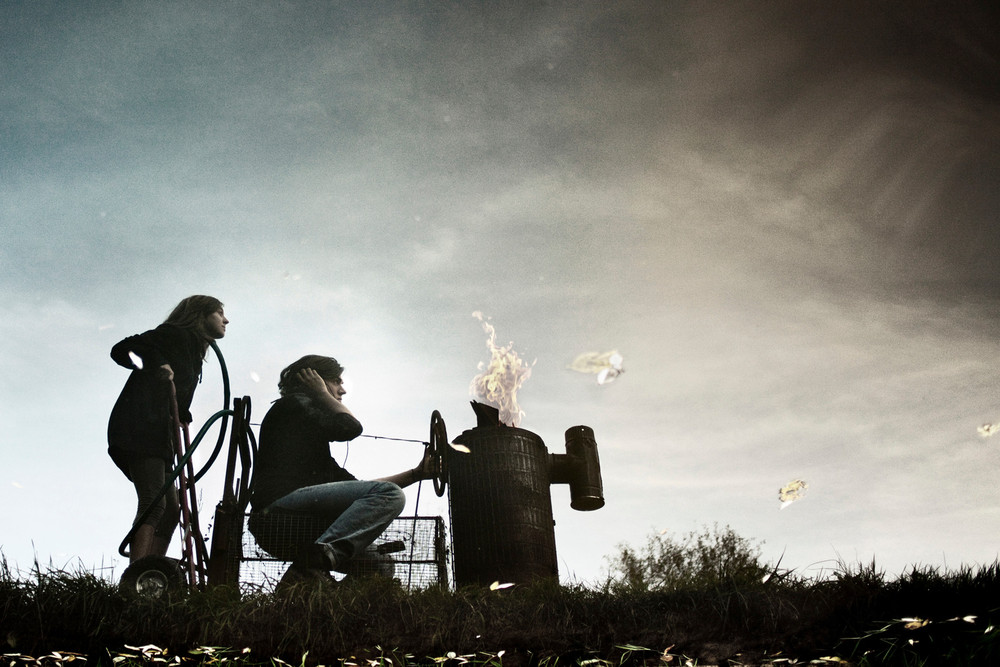
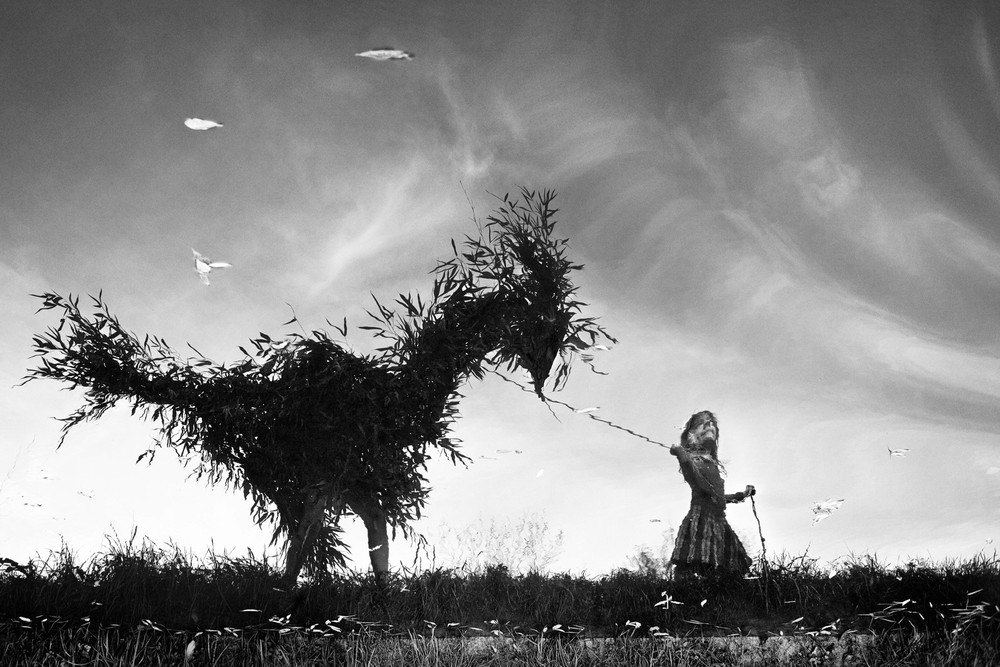
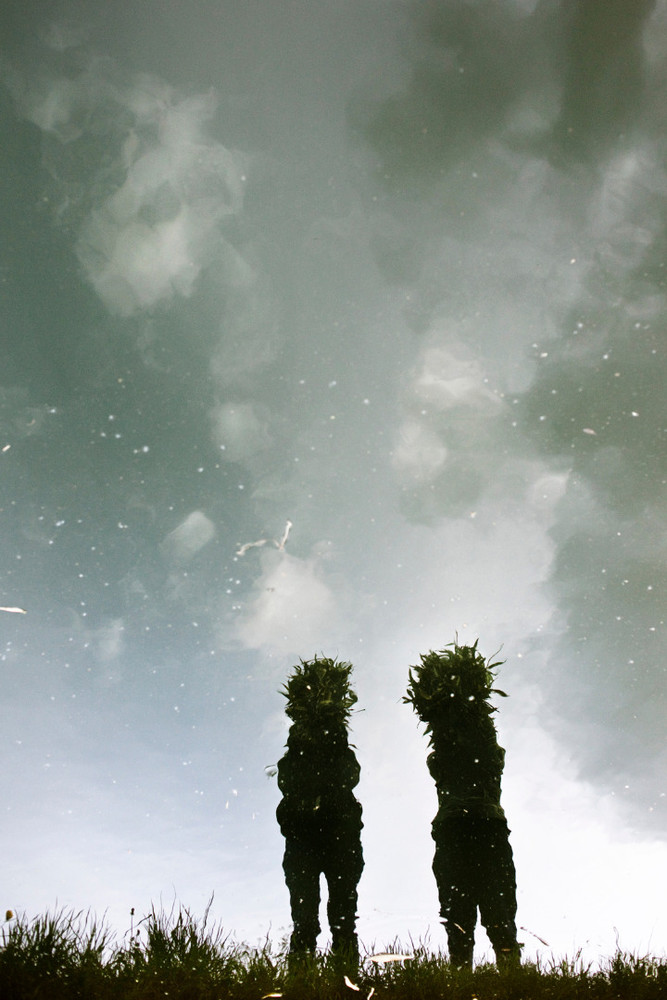
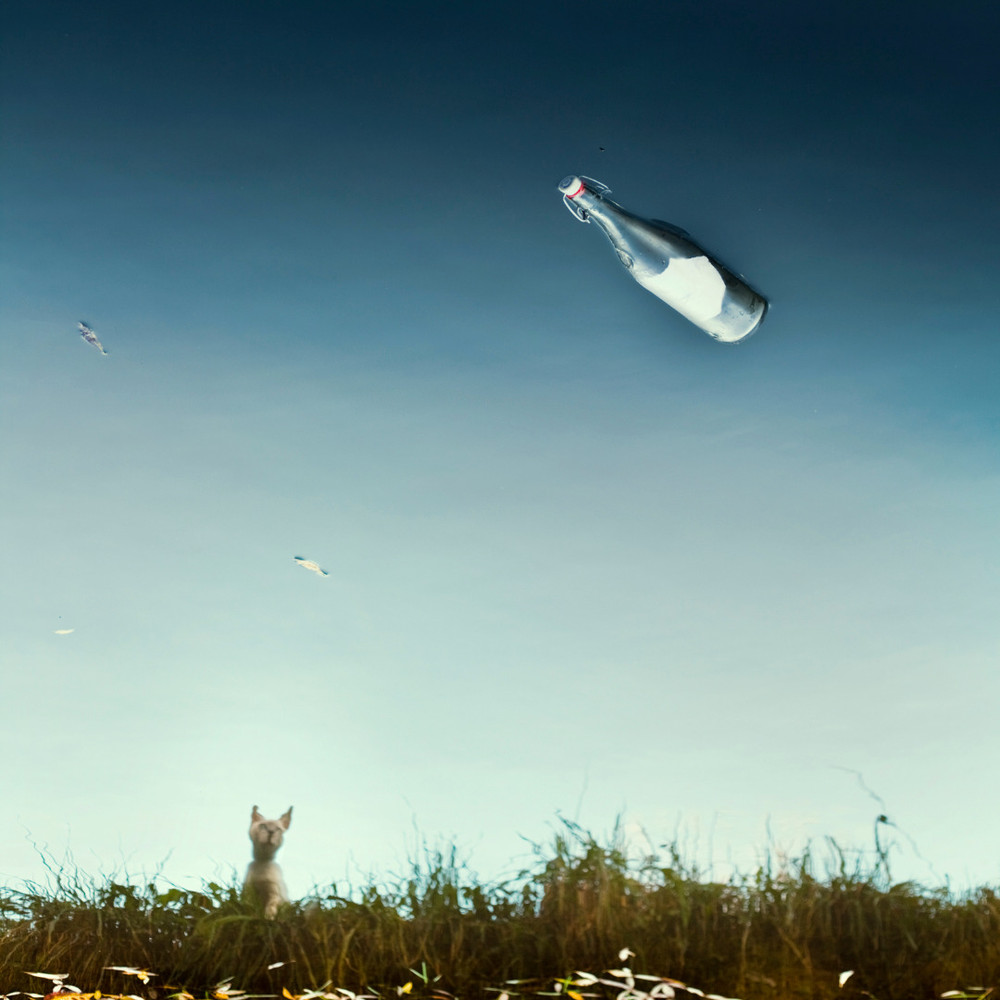
Later on, he pointed his lens towards his growing family which became his major subject, be it in a realistic depiction of their atypical lifestyle in “La Famille”, or in bizarre stagings around a pond in “Réflexion autour du bassin”.
Alain Laboile's work has since been exhibited around the world and he just published a book with Kehrer Verlag : "At the edge of the world"."
(Information found at https://www.lensculture.com/alain-laboile on 08.02.2016)
(All images found at https://www.lensculture.com/alain-laboile?modal=true&modal_type=project&modal_project_id=8531 on 08.02.2016)
Alma Haser
"Born into an artistic family in the Black Forest, Germany, Alma Haser is now based in London and the East coast. Specialising in carefully constructed portraiture influenced by her creativity and background in fine art, Alma creates striking work that catches the eye and captivates the mind.
Expanding the dimensions of traditional portrait photography, Alma takes her photographs further, using inventive paper-folding techniques to create layers of intrigue around her subjects, manipulating their portraits into futuristic flattened-paper sculptures. Her paper-craft skills have also led her to move into creating delicate models of small animals.
Shortlisted for the Taylor Wessing Portrait Prize at the National Portrait Gallery in 2012 for her piece 'The Ventriloquist', a portrait of two childhood friends, Alma has gone on to win third place at the 2012 Foto8 Summer Show and then the Magenta Foundation's Bright Spark Award in 2013 for her 'Cosmic Surgery; series. Her work has been exhibited worldwide."
(Information found at http://www.haser.org/about/ on 12.02.2016)
( Image found at http://static1.squarespace.com/static/54afe3ece4b0a3366e893bb3/54b13d01e4b02ac2285ee034/54c92d2ae4b0cc2362c9bcaf/1422470442676/AlmaHaser_LillyandAnastasia.jpg?format=500w on 12.02.2016)
( Image found at http://www.fubiz.net/wp-content/uploads/2014/02/Cosmic-Surgery-by-Alma-Haser-10-640x640.jpg on 12.02.2016)
( Image found at http://41.media.tumblr.com/6dfa321eb017e33cc9dddff3fe37d1ac/tumblr_mxchulnBer1skb8seo7_1280.jpg on 12.02.2016)
( Image found at http://en.ozonweb.com/wp-content/uploads/2014/04/Alma_Haser7.jpg on 12.02.2016)
Bill Viola
"Bill Viola (b.1951) is widely recognized as one of the leading video artists on the international scene. For over 30 years he has created videotapes, architectural video installations, sound environments, electronic music performances, and works for television broadcast. Viola’s video installations—total environments that envelop the viewer in image and sound—employ state-of-the-art technologies and are distinguished by their precision and direct simplicity. His single channel videotapes have been broadcast and presented cinematically around the world, while his writings have been published and anthologized for international readers.
Since the early 1970s, Viola has used video to explore the phenomena of sense perception as an avenue to self-knowledge. His works focus on universal human experiences—birth, death, the unfolding of consciousness—and have roots in both Eastern and Western art as well as spiritual traditions, including Zen Buddhism, Islamic Sufism, and Christian mysticism. He has been instrumental in the establishment of video as a vital form of contemporary art, and in so doing has helped to expand its scope in terms of technology, content, and historical reach.
Viola received his BFA in Experimental Studios from Syracuse University in 1973. Since then he has created over 150 works that have been shown in museums, galleries, film festivals, and on public television worldwide. During the 1970s he lived for 18 months in Florence, Italy, as technical director of production in one of the first video art studios in Europe, and then travelled widely to study and record traditional performing arts in the Solomon Islands, Java, Bali, and Japan. In 1977 Viola was invited to show his videotapes at La Trobe Univerisity (Melbourne, Australia) by cultural arts director Kira Perov who, a year later, left Australia to join him in New York. They began a lifelong collaboration, working and travelling together. After they married in 1980 they lived in Japan for a year and a half on a Japan/U.S. Cultural Exchange Fellowship, where they studied Buddhism with Zen Master Daien Tanaka and had an artist-in-residency at Sony Corporation’s Atsugi research laboratories. In 1984 another artist-in-residency at the San Diego Zoo in California produced footage for a project on animal consciousness.
Viola represented the U.S. at the 46th Venice Biennale in 1995, premiering an ensemble of five new installation works titled Buried Secrets. In 1997 the Whitney Museum of American Art organized “Bill Viola: A 25-Year Survey,” an exhibition that travelled for two years to six museums in the United States and Europe. He was invited to be a Scholar-in-Residence at the Getty Research Institute in Los Angeles in 1998, and later that year created a suite of three new video pieces for the rock group Nine Inch Nails’ world tour. His 1994 videofilm “Déserts,” created to accompany the music composition of the same name by Edgard Varèse, received its American premiere at the Hollywood Bowl in August 1999 with the Los Angeles Philharmonic, conducted by Esa-Pekka Salonen. In 2002, Viola completed his most ambitious project, “Going Forth By Day,” a five part projected digital “fresco” cycle in High Definition video, which was on view in “Bill Viola: Visions” at the ARoS Aarhus Kunstmuseum in Denmark in 2005. Following the completion of a four-month exhibition at the J. Paul Getty Museum in Los Angeles in early 2003, “Bill Viola: The Passions” travelled to the National Gallery London later that fall and to the Fondación “La Caixa” in Madrid in early 2005. It is currently on view at the National Gallery of Australia in Canberra. In 2004 Viola began collaborating with director Peter Sellars and conductor Esa-Pekka Salonen to create a new production of Richard Wagner’s opera, “Tristan and Isolde,” which was presented in project form by the Los Angeles Philharmonic in December 2004. The production of the complete opera received its world première at the L’Opéra National de Paris, Bastille in April 2005 (with a reprise in November) and will be presented once more at the Disney Concert Hall in Los Angeles in March 2007, and in New York in April 2007, produced by the Lincoln Center for the Performing Arts.
Viola is the recipient of numerous awards and honors, including a John T. and Catherine D. MacArthur Foundation Fellowship in 1989, and the first Medienkunstpreis in 1993, presented jointly by Zentrum für Kunst und Medientechnologie, Karlsruhe, and Siemens Kulturprogramm, in Germany. He holds honorary doctorates from Syracuse University (1995), The School of the Art Institute of Chicago (1997), California Institute of the Arts (2000), and Royal College of Art, London (2004) among others, and was inducted into the American Academy of Arts and Sciences in 2000. Bill Viola and Kira Perov live and work in Long Beach, California. They have two children."
(Information found at http://www.jamescohan.com/artists/bill-viola on 12.02.2016)
This is a still from the video Bill made. It is a great one because he directs the actors/actresses to each show one emotion and they really get into the part they are playing. Normally when you see videos like this it is one person showing all of the emotions. I also like the way it is in slow motion.
(Image found at http://artobserved.com/artimages/2011/02/Pressimage.jpg on 12.02.2016)
Sam Taylor-Wood
"Sam Taylor-Johnson makes photographs and films that examine, through highly charged scenarios, our shared social and psyschological conditions.
Taylor-Johnson’s work examines the split between being and appearance, often placing her human subjects – either singly or in groups – in situations where the line between interior and external sense of self is in conflict. Her languid and silent film portrait of David Beckham, for example, which was shot in a single take, offers a serene alternative to this most intensively photographed celebrity. In Prelude in Air (2005) Taylor-Johnson filmed a musician playing a piece of cello music by Bach, but the cello itself has been erased. Likewise, in Breach (Girl and Eunuch) (2001), a girl is portrayed sitting on the floor in the throes of grief, but the sound of her tears has been removed. In the celebrated film Still Life (2001), an impossibly beautiful bowl of fruit decays at an accelerated pace, creating a visceral memento mori. In her film The Last Century (2005), what appears to be a static image of a group of people slowly reveals itself to be a real, filmed take, timed to the length of a burning cigarette: the film is entirely static apart from the involuntary blinking, twitching and barely-visible breathing of four motionless actors, all arranged around a central figure as if in a group portrait painted by Rembrandt or Caravaggio. Taylor-Johnson has also explored notions of weight and gravity in elegiac, poised photographs and films such as Ascension (2003) and a series of self-portraits (Self Portrait Suspended I - VIII) that depict the artist floating in mid air without the aid of any visible support, a motif she returned to, portraying herself suspended by helium-filled party balloons in the series called Escape Artist (2008). Taylor-Johnson’s first feature-length film, Nowhere Boy (2009), a look at the teenage years of John Lennon, premiered at the London Film Festival in October 2009. February 2015 saw the release of Taylor-Johnson’s directorial feature, FIFTY SHADES OF GREY, the highly-anticipated adaptation of the best-selling novel.
Sam Taylor-Johnson was born in London in 1967 and has had numerous group and solo exhibitions, including the Venice Biennale (1997) and The Turner Prize (1998). Solo exhibitions include Kunsthalle Zurich (1997), Louisiana Museum of Modern Art, Humlebaek (1997), Hirshhorn Museum and Sculpture Garden, Washington DC (1999), Museo Nacional Centro de Arte Reina Sofia, Madrid (2000), Hayward Gallery, London (2002), State Russian Museum, St Petersburg (2004), MCA, Moscow (2004), BALTIC, Gateshead (2006), MCA Sydney (2006), MoCA Cleveland (2008) and the Contemporary Art Museum, Houston (2008), Brooklyn Museum, New York (2010). In 2011 she was made an Order of the British Empire (OBE)."
(Information found at http://whitecube.com/artists/sam_taylor-johnson/ on 12.02.2016)
The images below are still taken from a time lapse video called Still Life. I think this video is fantastic but also gross at the same time. It must have taken weeks for this to be possible and the smell must have been awful. I think the flies towards the end are brilliant. It looks like an old painting with the way it has been staged and framed. I really it because of that.
(Image found at http://images.tate.org.uk/sites/default/files/images/sam_taylor_wood_still_life_one.jpg on 12.02.2016)
(Image found at http://images.tate.org.uk/sites/default/files/images/sam_taylor_wood_still_life_two.jpg on 12.02.2016)
Here is the link for the Still Life video... https://www.youtube.com/watch?v=pXPP8eUlEtk
Chris Cunningham
"Chris Cunningham (born 15 October 1970) is a British video artist. He was born in Reading, Berkshire and grew up in Lakenheath, Suffolk.
Cunningham has primarily directed music videos for ambient music and electronica acts such as Autechre and Aphex Twin. He has also created art installations and directed short movies. He was approached to direct a movie version of the cyberpunk novel Neuromancer, but nothing came of early discussions. In the 2000s, Cunningham began doing music production work. He has also designed album artwork for a variety of musicians.
The video collection The Work of Director Chris Cunningham was released in November 2004 as part of the Directors Label set. This DVD includes selected highlights from 1995–2000."
(Information found at https://en.wikipedia.org/wiki/Chris_Cunningham on 12.02.2016)
Chris Cunningham in my opinion is an absolute genius but has a very twisted mind. A lot of his work is creepy and very odd. It is almost nightmare ish. How someone could think about creating the work he does I don't know. All I can say is that I love it but I can't watch everything or I'd be scared for life. The way he frames is just brilliant. The more videos I watch the more I am starting to recognise his unique style and special effects.
Below are the links to a few, in my opinion, epic videos made by Chris Cunningham...
https://vimeo.com/43444347 - All is Full of Love - Bjork (Director - Chris Cunningham)
https://www.youtube.com/watch?v=FDdNn0x7Y0Y - Mental Wealth
https://www.youtube.com/watch?v=M71fmWPvXi4 - The Great Below (NIN + Chris Cunningham)
